
By Brandon Hernandez
With the holiday season over and the new year begins , so it’s time to start thinking about eating healthier again. Research shows that on average, people put on just a pound or two over the holidays, but any weight you gain can take months to shed.
That means you’ll probably want to return to eatingi a healthier diet as soon as you can. But it’s not always so easy.
“People set unrealistic goals and attempt to make wholesale changes,” says Lesley Lutes, Ph.D., an associate professor of psychology at the University of British Columbia. “That all-or-nothing behavior becomes overwhelming, leaves you feeling deprived, and sets you up for failure.”
That’s exactly why we’re advocating a more realistic approach: Try just a few minor tweaks. That makes the changes doable, not daunting, and you will see improvements in your health.
“You have so many diet choices to make every day, so even if you make a change only some of the time, the benefits add up,” Lutes says.
Research by scientists at the University of South Australia supports that strategy. They found that replacing just 25 percent of discretionary foods (such as desserts, snacks, and sugary beverages) with healthy foods resulted in a huge improvement in overall diet quality—reducing the intake of sugars by almost 21 percent and calories by almost 4 percent, and increasing protein intake by about 2 percent.
That means that something as simple as trading a few cookies for a piece of fruit can make a big difference in helping you follow a healthier diet.
Here are nine strategies you can use to build your own personalized healthier diet.
Eat Healthy Foods You Like
A 2016 study from Baylor University’s Hankamer School of Business found that even people with little self-control can set themselves up for healthy-eating success if they switch their attention from what the researchers called “avoidance” foods to “approach” foods. Don’t try to force-feed yourself something healthy that you hate (such as kale) in place of something unhealthy you love (cake).
“Seek out yummy healthy foods—such as strawberries—and you might find that after enjoying a big bowl of fresh berries, you no longer want that chocolate cake,” says Meredith David, Ph.D., lead author of the study.
Cook More
People who eat home-cooked meals five or more times per week were 28 percent less likely to be overweight and 24 percent less likely to have excess body fat than those who ate at home fewer than three times per week. That’s according to a 2017 study involving more than 11,000 people published in the International Journal of Behavioral Nutrition and Physical Activity. The researchers found that those who dined at home ate more fruits and vegetables, too. Another study showed that cooking at home also reduces a person’s exposure to toxic chemicals called PFAS that are in some fast-food and takeout packaging.
Eat Your Veggies First
If you’re not eating enough vegetables (and most of us aren’t), it could be because you put them in a contest they can’t win.
“Research has shown that when vegetables are competing with other—possibly more appealing—items on your plate, you eat less of them,” explains Traci Mann, Ph.D., professor of social and health psychology at the University of Minnesota and author of “Secrets From the Eating Lab” (HarperCollins, 2015). “But when you get the vegetables alone, you eat more of them.”
Mann has studied this strategy—serving veggies solo before the rest of the meal—with college students and preschoolers, but she reasons that it would work for anyone.
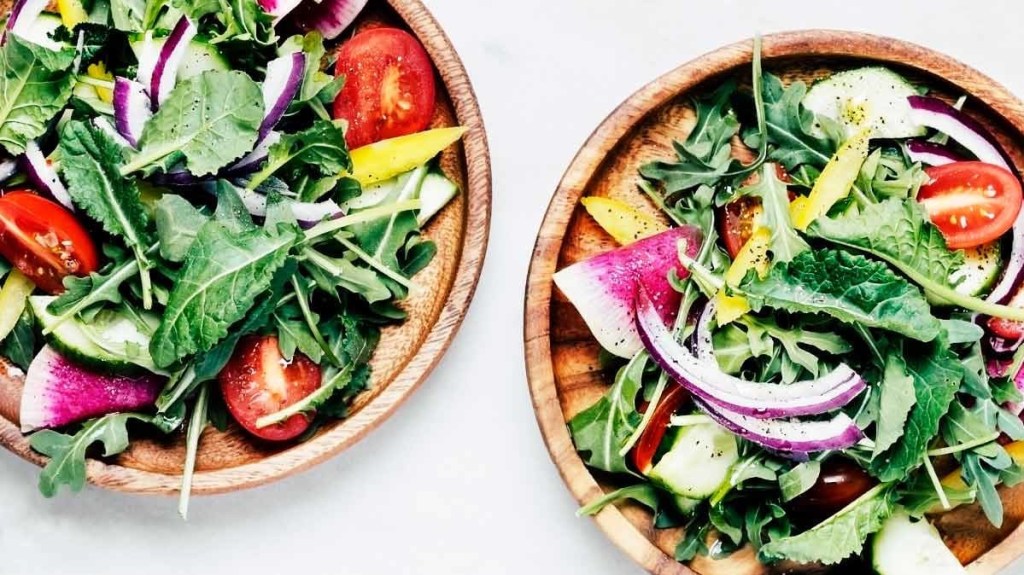
“Make a salad and sit down to eat it before you put any other food on the table,” she suggests. “You’ll not only eat more vegetables, you’ll also fill up a bit so that you eat less later in the meal.”
Go Meatless One Day per Week
A 2016 study published in JAMA Internal Medicine found that replacing animal protein with an equivalent amount of plant protein was associated with a lower risk of mortality, especially from heart disease. So swap your burger for a veggie version or make a bean chili so hearty that no one will miss the meat.
Have a Better Breakfast
Research shows that having a big breakfast that contains protein (yogurt or eggs, for example) helps to prevent weight gain, promotes weight loss, and reduces the number of calories you consume in the evening.
Make a Small Snack More Satisfying
You don’t need to give up your favorite sweets, but you can eat less and enjoy a snack just as much. The secret is being mindful. Give your treat your full concentration and focus on the flavor and texture. That will help you feel satisfied with a smaller portion.
Munch on Nuts
Many people think of nuts as having a lot of calories and fat, but they typically don’t cause people to pack on the pounds. Plus, they help reduce the risk of heart disease and type 2 diabetes, according to several studies. Any unsalted nut is a good pick, but it’s best to switch up the types you eat because each variety has its own blend of nutrients. For instance, almonds have more fiber than many other nuts and supply calcium, while walnuts are packed with a heart-healthy omega-3 fatty acid called alpha-linolenic acid (ALA).
Make a Move to Whole Grains
More than 40 percent of the carbohydrates we consume are low in nutritional quality, according to a 2019 study published in JAMA. (The researchers defined low-quality carbs as refined grains, added sugars, fruit juice, and potatoes.) Simply switching from refined grains to whole grains, such as farro, bulgur, oatmeal, and even popcorn, can increase your fiber intake and help keep you full. In one study published in 2011 in the New England Journal of Medicine, adding just one serving of whole grains per day led to an average weight loss of about a third of a pound over four years. And another study from researchers at Tufts University found that eating whole grains and raising your overall fiber intake increases metabolism to the tune of about 100 calories per day. Try trading white rice for bulgur, cornflakes for oatmeal, or white pasta for whole wheat.
Replace a Sugary Drink With Water
We all know that soda isn’t the healthiest beverage choice. But a recent study suggests that exchanging one serving per day for a glass of water could help reduce overall calorie intake and the subsequent risk of obesity, lowering your risk of developing type 2 diabetes by 14 to 25 percent.
Take a look at your fruit juice intake, too. Even 100 percent fruit juices can contribute a lot of calories and sugars to your diet. For a healthier diet, limit yourself to one 4-ounce glass per day.
You can also use a blender to turn whole fruit into liquid form or whip up a fruit smoothie; that way you’ll be getting the fruit’s fiber. Below are some top-rated blenders in Consumer Reports’ tests. QUICK TAKE

 Health joint